
How We Work
“Corporations don’t do pentesting, people do.”
At RM Information Security, we believe the experience and technical ability of the consultant are fundamental to delivering effective penetration testing. We combine this expertise with a thorough, methodical approach to identify vulnerabilities and provide findings that are meaningful to your business.
Our approach is practical and collaborative. We maintain regular communication throughout testing, discussing findings as they arise and helping clients understand any immediate risks. Where appropriate, we can adapt the testing plan to ensure the engagement remains focused on the areas that matter most.
Every assessment is tailored to the systems and scope involved. Our testing methodologies draw on recognised industry guidance, including OWASP, NIST, OSSTMM and PTES, while allowing our consultants to apply their experience and judgement when investigating more complex vulnerabilities.

Our Penetration Testing Process
Although every engagement is different, we follow a structured process from initial scoping through to reporting and aftercare. This ensures testing is properly authorised, focused on the agreed objectives and supported by clear communication throughout.
1. Requirements Gathering
We discuss your requirements, understand the systems to be tested and agree the objectives, scope and approach. This forms the basis of our proposal and the work to be delivered.
2. Project Initiation
Before testing begins, we confirm the agreed scope, testing arrangements, authorisation and any access credentials or technical prerequisites.
3. Penetration Testing
Our consultants carry out testing using established methodologies, manual investigation and appropriate security testing tools. We communicate significant findings as they arise and discuss any changes to the testing plan where necessary.
4. Reporting
We provide a clear report containing an executive summary, technical findings, risk ratings and practical remediation recommendations. Findings are reviewed in the context of the systems and business risks involved.
5. Aftercare
We support clients in understanding the findings and planning remediation. This can include debrief sessions, technical discussions and retesting where agreed.
Penetration Testing Cost
The cost of penetration testing depends on the scope, size and complexity of the systems being assessed. Rather than applying a fixed price, we work with clients to understand their requirements and recommend an appropriate level of testing.
During the initial scoping discussion, we consider the type of assessment, the number of applications or systems involved, their complexity and any specific testing requirements.
We then agree the estimated number of testing days and provide a clear proposal outlining the scope, approach, deliverables and cost before work begins.
Our aim is to ensure the testing is proportionate to the risks involved and provides meaningful value to your business.
Penetration Test Reporting
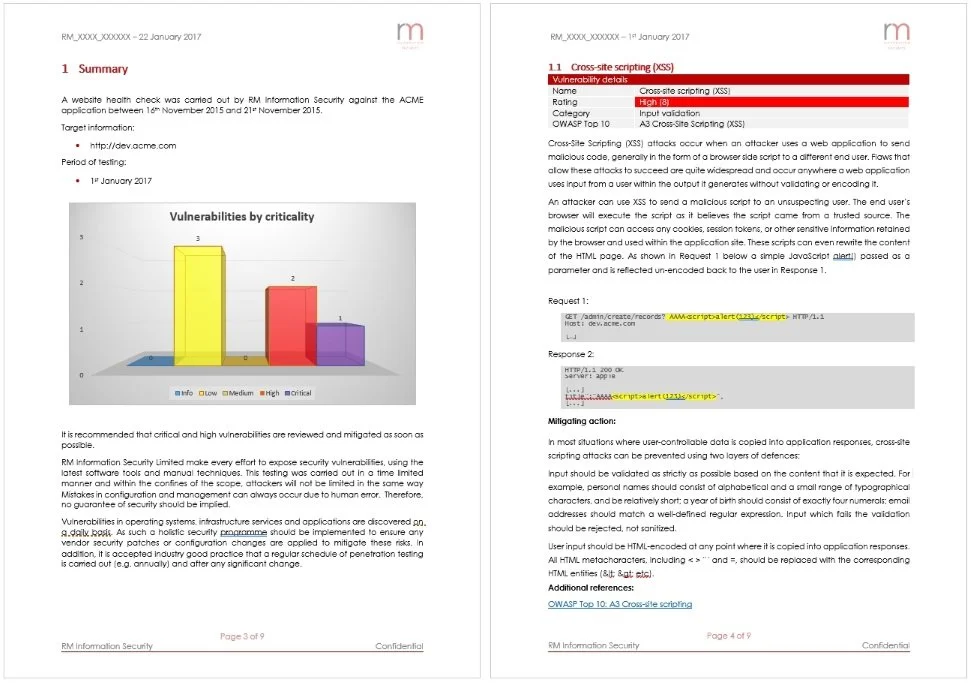
A penetration test is only useful if the findings are clearly communicated and can be acted upon. At RM Information Security, we produce reports designed to support both management decision-making and technical remediation.
Our reports include an executive summary, an overview of the assessment scope and a prioritised breakdown of vulnerabilities. Each finding includes a risk rating, supporting technical evidence and practical recommendations for remediation.
We use CVSS as a basis for assessing vulnerability severity, alongside our consultants' judgement of the specific systems and circumstances involved. This helps clients understand which issues require the most urgent attention.
Detailed technical findings provide the information needed by developers, infrastructure teams and other technical stakeholders to investigate and address identified vulnerabilities.A penetration test is only useful if the findings are clearly communicated and can be acted upon. At RM Information Security, we produce reports designed to support both management decision-making and technical remediation.
Our reports include an executive summary, an overview of the assessment scope and a prioritised breakdown of vulnerabilities. Each finding includes a risk rating, supporting technical evidence and practical recommendations for remediation.
We use CVSS as a basis for assessing vulnerability severity, alongside our consultants' judgement of the specific systems and circumstances involved. This helps clients understand which issues require the most urgent attention.
Detailed technical findings provide the information needed by developers, infrastructure teams and other technical stakeholders to investigate and address identified vulnerabilities.
Pen Test Certificate
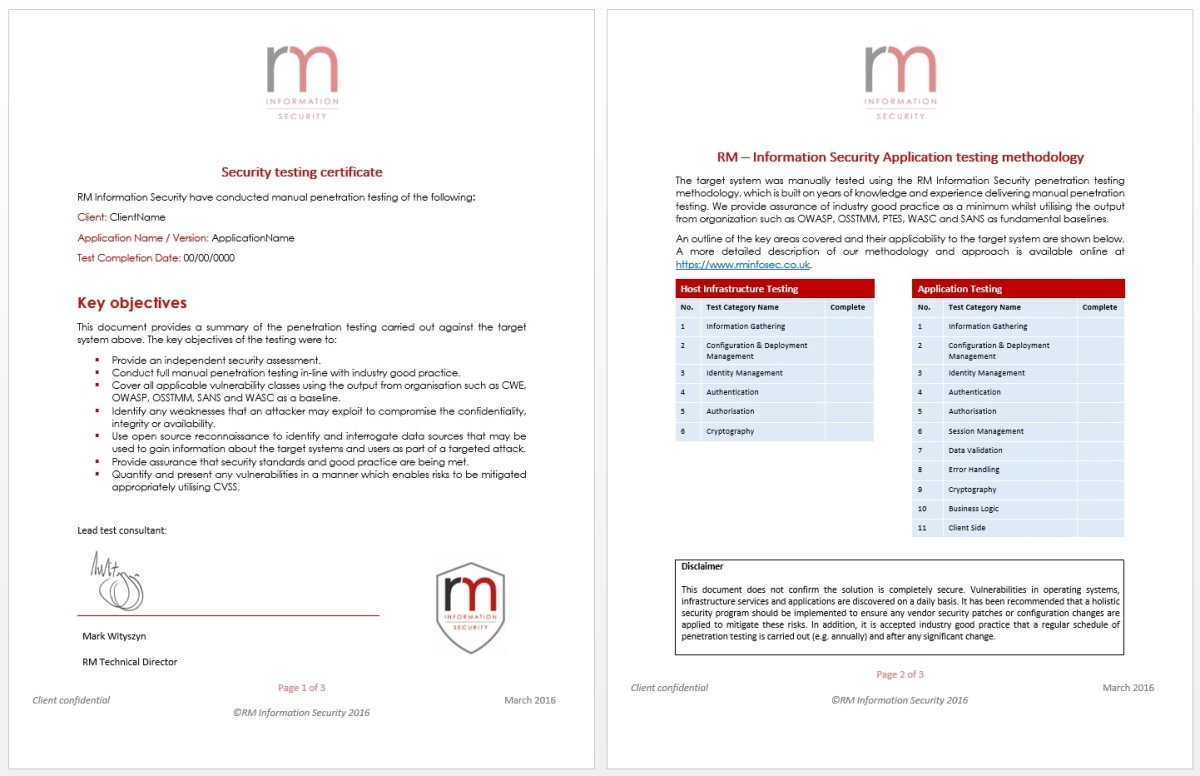
Following a penetration test, clients may need to demonstrate to customers, auditors or other stakeholders that independent security testing has been carried out.
Alongside our technical report, RM Information Security provides a penetration testing certificate summarising the assessment. This includes information about the scope of testing, the dates involved and the testing approach.
The certificate provides a convenient way to share high-level assurance without disclosing the sensitive technical information contained in the full penetration testing report.
It is not a guarantee that a system is free from vulnerabilities, but provides evidence of the testing undertaken and its outcome.
Aftercare and Remediation Support
The value of penetration testing extends beyond identifying vulnerabilities. Understanding the findings and implementing appropriate remediation is an important part of improving security.
At RM Information Security, we work with clients after testing to explain the results, discuss remediation options and help technical teams understand the changes required.
Our aftercare support can include debrief sessions with management and technical stakeholders, discussions with developers or suppliers, and retesting to validate fixes where agreed.
We also recognise that security improvements are an ongoing process. Our consultants can provide practical advice on future testing requirements, security architecture and wider information security initiatives.
Ready to discuss your security requirements?
Talk directly to the team who will deliver your project.